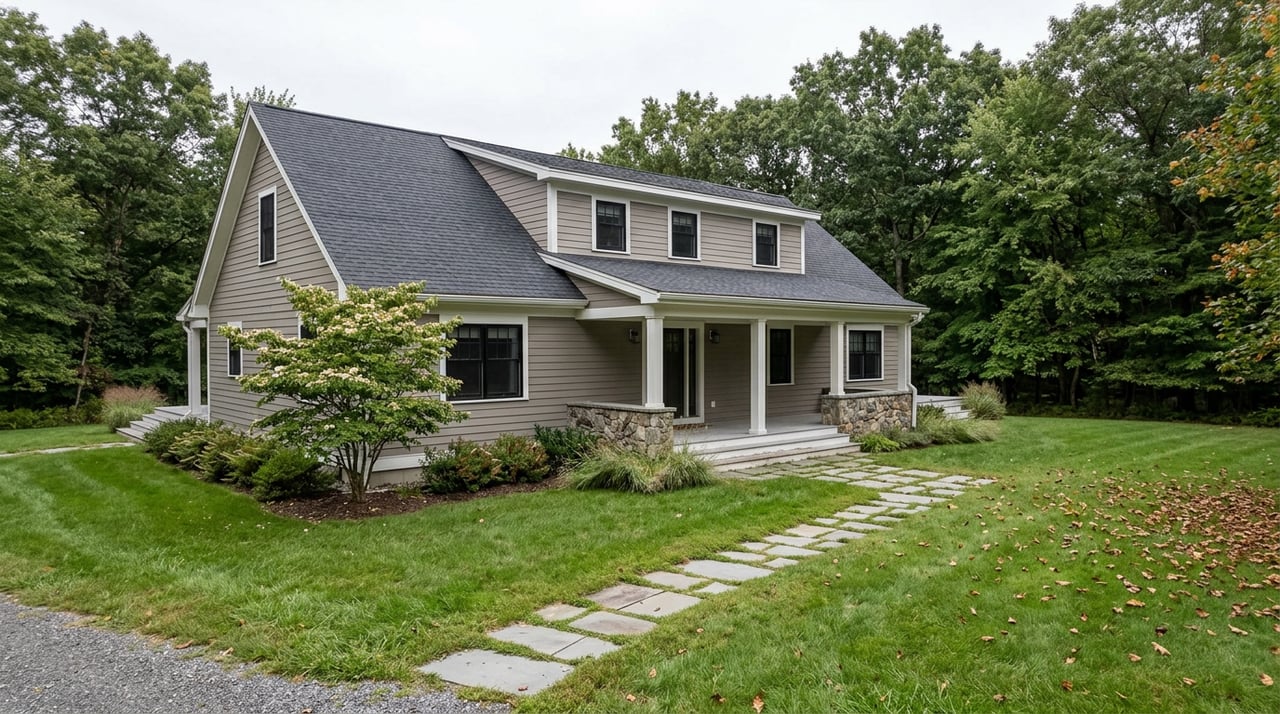
Why Allegan County Won't Inspect Your Well Or Septic Before You Buy Near Fennville
September 3, 2026
September 3, 2026
"Buyer to do inspections on well and septic and verify." That line shows up again and again in land listings around Fennville, tucked into descriptions for wooded acreage near Hutchins Lake, riverfront lots outside New Richmond, and blueberry-lined parcels off the two-lane roads that run past the orchards. It reads like standard boilerplate. It is actually a fairly precise summary of how the system works here, and it surprises a lot of buyers who assume otherwise.
Buyers moving into rural Michigan from places with municipal water and sewer tend to picture a government checkpoint standing between them and a bad system: an inspector who shows up, tests the well, checks the tank, and issues some kind of pass or fail before the deal can close. That checkpoint exists in some Michigan counties. It does not exist in Allegan County, where Fennville and its surrounding townships sit.
Michigan is the only state without a statewide sanitary code. Each county health department writes its own rules, which means the requirement your neighbor's cousin dealt with buying a cottage up north may have nothing to do with what applies to a parcel outside Fennville. Some counties, particularly ones with dense concentrations of inland lakefront property, have adopted mandatory Time of Transfer ordinances that require a septic and well evaluation before a deed can change hands. Washtenaw, Grand Traverse, Emmet, and Charlevoix counties all enforce some version of this. Allegan County has not adopted one.
The Allegan County Health Department's own environmental health page is direct about how evaluations of existing systems happen. It states that these evaluations are conducted "usually at the request of a lending institution or home buyer," not as a standing requirement triggered by the sale itself. The same page describes well evaluations the same way: existing wells get checked when a lender or buyer asks for it, typically to satisfy mortgage underwriting, not because the county requires it as a condition of transfer.
That distinction matters more than it sounds like it should. In a county with a mandatory ordinance, the seller is on the hook to produce a passing evaluation before closing, and the process happens whether anyone requests it or not. In Allegan County, if nobody asks, nobody looks. The county will happily perform an evaluation on request, and staff will issue a written compliance report when they do, but the initiative has to come from somewhere other than the ordinance itself.
Here's how Allegan compares to counties that have gone the mandatory route:
| County | Point-of-sale inspection required? | Who typically initiates the check |
|---|---|---|
| Allegan | No county mandate | Lender or buyer request |
| Washtenaw | Yes | County ordinance triggers it automatically |
| Grand Traverse | Yes | County ordinance triggers it automatically |
| Emmet | Yes | County ordinance triggers it automatically |
| Charlevoix | Yes | County ordinance triggers it automatically |
The pattern among the mandatory counties is not random. They tend to be places with a high concentration of older lakefront cottages, where a septic system installed decades ago might be quietly failing under a system that predates current code. The ordinances were built to catch that. Allegan County has plenty of the same conditions, sandy lakeshore soils near the water and heavier clay inland, older resort-era systems around lakes like Gun Lake and Hutchins Lake, but the county has chosen a request-based model instead of a mandatory one.
Two things fill the gap left by the missing ordinance, and neither of them happens automatically.
The first is your lender. If you're financing a purchase with an FHA, VA, or USDA loan, the underwriting guidelines require documentation that the septic system functions properly and that the well produces potable water before the loan can close. That requirement isn't optional and doesn't depend on the county. Your lender will ask for it whether Allegan County does or not.
The second is you. Even a cash buyer with no lender to satisfy has no county-mandated safety net here. The purchase agreement is the only place that protection gets built in, and it only gets built in if someone writes it into the contract. That's the practical reason so many Fennville-area land listings carry language putting inspection responsibility squarely on the buyer. Nobody is coming to check unless the buyer, or the buyer's lender, makes the request.
A lot of what's listed in and around Fennville isn't a house with an existing well and septic. It's raw acreage, orchard ground, or wooded lots being sold with the expectation that a buyer will build. That changes the inspection question into a feasibility question, and Allegan County handles that piece through a separate process.
The county's Raw Land and Preliminary Plat application evaluates undeveloped ground based on soil conditions to determine whether a septic system can be installed there at all. This isn't optional paperwork you can skip if you're confident the ground looks fine. Soil evaluation and percolation testing by a licensed evaluator has to happen before the county will issue any construction permit, and results depend heavily on where the parcel sits. Sandy soils near the Lake Michigan lakeshore plain generally drain well. Ground closer to the Kalamazoo River or Gun Lake often has muck and peat that requires an engineered, more expensive system instead of a standard one.
If you're looking at raw acreage with the idea of building later, that soil evaluation should happen before you're deep into a purchase agreement, not after. A gorgeous wooded lot that can't pass a percolation test is a very different asset than the same lot with a septic-ready designation already on file.
There's a second permit that catches land buyers off guard, and it has nothing to do with septic capacity. Allegan County requires a Soil Erosion and Sedimentation Control permit for any project disturbing one acre or more, and separately for any project within 500 feet of a lake, stream, river, storm drain inlet, or wetland, regardless of the project's total acreage.
That second trigger is the one worth paying attention to around Fennville, where a meaningful share of the acreage on the market sits near Hutchins Lake, Lake Nicana in Saugatuck Township, or the Kalamazoo River corridor. Clearing land, grading a driveway, or prepping a building pad within that 500-foot band requires the same permit as a much larger project would elsewhere in the county. Buyers who budget for a straightforward site prep sometimes discover the water-proximity trigger only once they're already applying for a zoning or building permit.
Michigan Senate Bill 771 advanced out of committee in June 2026 and would establish statewide septic evaluation requirements tied to a system's age and its proximity to water, rather than tied to when a property changes hands. It has not passed and is not law. If it eventually is enacted, it would run alongside county Time of Transfer ordinances rather than replace them, and it would mean a meaningful share of Michigan's roughly 1.3 million septic systems get evaluated on a schedule instead of only when someone sells or asks. For now, none of that applies. The request-based model described above is still exactly how Allegan County operates.
Given all of this, a buyer working a well-and-septic property or raw acreage around Fennville is better served by building protection into the contract than by assuming the county will handle it. Worth requesting before you're locked into a deal:
Does Allegan County require a septic inspection before I can buy a home there? No. The county performs evaluations of existing systems, but typically only when a lender or the buyer requests one, not as an automatic step in every sale.
If there's no county mandate, does that mean I can skip the inspection? You can, but your lender likely won't let you if you're financing the purchase, and skipping it on a cash deal means taking on a risk the seller has no legal obligation to disclose beyond Michigan's standard Seller Disclosure Statement.
Is raw land different from an existing house on this issue? Yes. Undeveloped land goes through a soil evaluation and percolation test under Allegan County's Raw Land and Preliminary Plat process to determine whether a septic system can be installed at all, which is a separate question from evaluating a system that already exists.
If you're comparing a well-and-septic home or a raw acreage parcel around Fennville, Saugatuck Township, or the broader Allegan County shoreline, it helps to know exactly what a specific property's permit history looks like and what your lender will require before you write an offer. Tony Hernandez works this market regularly and can walk you through what to ask for on a specific listing. Get your free home valuation to start the conversation, whether you're buying, selling, or still deciding which parcel makes sense.
Stay up to date on the latest real estate trends.



Get assistance in determining current property value, crafting a competitive offer, writing and negotiating a contract, and much more. Contact me today.