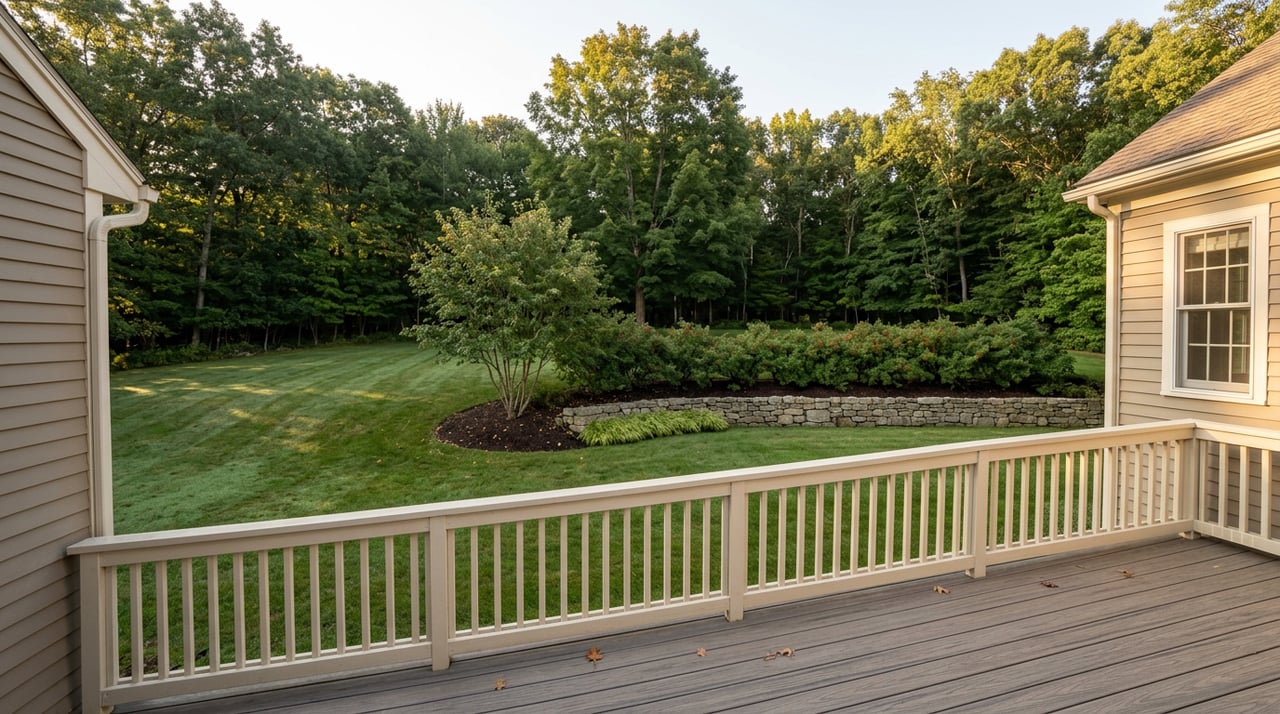
The South Haven Rental License That Doesn't Come With the House
September 10, 2026
September 10, 2026
A listing agent can tell you a South Haven cottage has a strong rental history. What that listing can't tell you is whether you, as the buyer, will be allowed to rent it at all.
That's the piece most buyers miss when they start shopping South Haven as an income property. The rental license attached to a listing belongs to the current owner, not the address. In the City of South Haven, licenses issued under the current short-term rental ordinance are not transferable and typically run for two years before they need renewal. Buy the house, and you still have to apply for your own license, which means you're stepping into whatever the city's rental system looks like on the day you close, not the day the listing photos were taken.
Right now, that system is in the middle of a genuine bottleneck.
The city has been operating under a new short-term rental framework since early 2025, when the council adopted Ordinance No. 1097 to replace the 2018 rules known as Article X. The new structure, Article V of Chapter 14, sorts rentals into two license types. Class II covers limited or personal use, capped at six rental terms or 28 rental days a year. Class I allows unlimited rentals but restricts hosts to no more than two stays in any seven day period and requires proof of a million dollars in liability insurance.
That reclassification sounds like routine housekeeping until you look at how many properties had to move through it at once. At a South Haven City Council committee meeting in early March, staff reported that of the roughly 700 short-term rentals operating in the city, only about 20 percent had completed the new licensing process, with the old Article X registrations set to expire by May 1, 2026. City Manager Kate Hosier described the city as racing toward that deadline without the staff capacity to clear the queue in time, and the council responded by approving a conditional licensing option starting March 27, 2026, so existing hosts could keep operating while their paperwork worked through the system.
City Attorney Dave Eberle also flagged a second wrinkle for anyone assuming a rental history guarantees future approval: many of these properties are now treated as legal nonconforming uses, meaning an owner generally can't expand or intensify how the unit is rented, even where past renovations added bedrooms or rental capacity without the right permits at the time.
None of this means South Haven has stopped licensing rentals. It means the license is a live administrative process tied to a specific owner and a specific property history, not a feature that rides along with the deed. If you're buying with rental income in your plan, confirming the actual license status of that specific parcel, not the seller's past income, is the first call to make.
Even once the paperwork clears, the city doesn't hand out licenses without limit. South Haven caps short-term rentals at a ratio of one for every four housing units, or 20 percent of the city's total housing stock, according to the South Haven Vacation Rental Alliance. That ceiling isn't fixed. It's recalculated annually based on how the city's total housing count changes, which means the number of available license slots can shift from one year to the next, sometimes upward, sometimes down.
That's the part worth sitting with. In a market this small, a ratio cap tied to total housing stock means the supply of legal short-term rentals is a moving target that has nothing to do with how many buyers want one. A property that operated as a licensed rental for a decade doesn't guarantee that slot stays available if the license lapses during a backlog like the one the city worked through this spring. If you're counting on rental income as part of your offer price, the honest question isn't whether the house can physically host guests. It's whether a license slot exists for it at all when you're ready to apply.
Here's the part that catches out-of-area buyers the most: "South Haven" as a place name covers two separate governments with two separate rental rulebooks, and the boundary between them isn't something you can tell from a listing photo or a mailing address.
Properties inside South Haven Charter Township, just outside the city limits, follow an entirely different ordinance. Stays have to run at least three nights and no more than 27, and only one rental term can start in any given calendar week. Owners who live more than 45 miles from the property are required to designate a local agent who can respond on site. The township also caps occupancy at 12 people, requires a million dollars in rental liability insurance, and, for parcels without access to public sewer, requires septic certification before the property can be rented.
The table below lines up the two systems side by side.
| City of South Haven | South Haven Charter Township | |
|---|---|---|
| License structure | Two classes (Class I unlimited, Class II limited to 6 terms/28 days) | Single ordinance, no class system |
| Stay length | Set by license class | Minimum 3 nights, maximum 27 nights |
| Rental frequency | Class I: max 2 stays per 7 days | One rental term per calendar week |
| Out-of-area owner rule | Not specified in city ordinance | Local agent required if owner lives 45+ miles away |
| Housing-stock cap | Yes, 1:4 ratio (20%) | Not part of the township ordinance |
| Septic requirement | Not applicable citywide | Required where no public sewer connection exists |
Neither system is more or less strict across the board. The township has no housing-stock ratio cap constraining how many rentals can exist, but it trades that flexibility for a stricter minimum stay and a distance rule that forces owners living farther away to hire local management. The city has more licensing overhead and the ratio ceiling, but a wider range of stay lengths under a Class I license. What matters for a buyer is that these aren't details you negotiate. They're fixed by which side of an administrative line the parcel sits on, and that line frequently runs through neighborhoods that look and feel identical from the street.
Even with a license secured, South Haven's rental income doesn't arrive evenly across twelve months. A local economic study that reviewed AirDNA booking data for the area found occupancy climbing from roughly 30 to 40 percent in winter and early spring to about 75 percent in June, peaking near 90 percent in July, holding around 85 percent in August, and sliding back to the 30 to 50 percent range by late fall and winter.
That curve is the shape of a Lake Michigan tourist season, and it's worth building into any pro forma before you fall in love with a gross annual rent figure. Most of the year's income lands in a 10 to 12 week window. A licensing delay that costs you even part of June or July isn't a minor administrative hiccup. It's a meaningful percentage of the property's entire annual income potential.
Separate from any rental license, Michigan's tax code treats a second home differently than a primary residence, and this piece applies whether the parcel sits in the city or the township. The state's Principal Residence Exemption reduces local school operating millage for a homeowner's one true, permanent home. A vacation property doesn't qualify, and that gap can run up to 18 mills on the school operating portion of the bill alone. Layered against the standard difference between homestead and non-homestead rates, the total swing commonly runs close to 30 percent higher on a second home than an otherwise identical primary residence.
This has nothing to do with whether the property is licensed as a rental. It applies to a vacation home you never intend to rent at all. Before you anchor a budget to the seller's current tax bill, run the numbers at non-homestead rates using Michigan's official property tax estimator, which lets you model the second-home rate directly rather than guessing from the current owner's bill.
A "South Haven" listing tells you about beach access, the lighthouse, and the harbor. It doesn't tell you which government regulates your rental calendar, whether a license slot is actually available under the city's ratio cap, or what your real tax bill looks like once the seller's homestead exemption disappears at closing. Those three questions sit underneath the price, and they're the ones worth answering before an offer goes in, not after.
If you're weighing a South Haven property with rental income in mind, Tony Hernandez can help you confirm which jurisdiction a specific parcel falls under, where it sits relative to the city's licensing cap, and what the real carrying cost looks like at non-homestead rates. Start with a free home valuation and a straight answer on what that specific address can and can't do.
Stay up to date on the latest real estate trends.
Get assistance in determining current property value, crafting a competitive offer, writing and negotiating a contract, and much more. Contact me today.