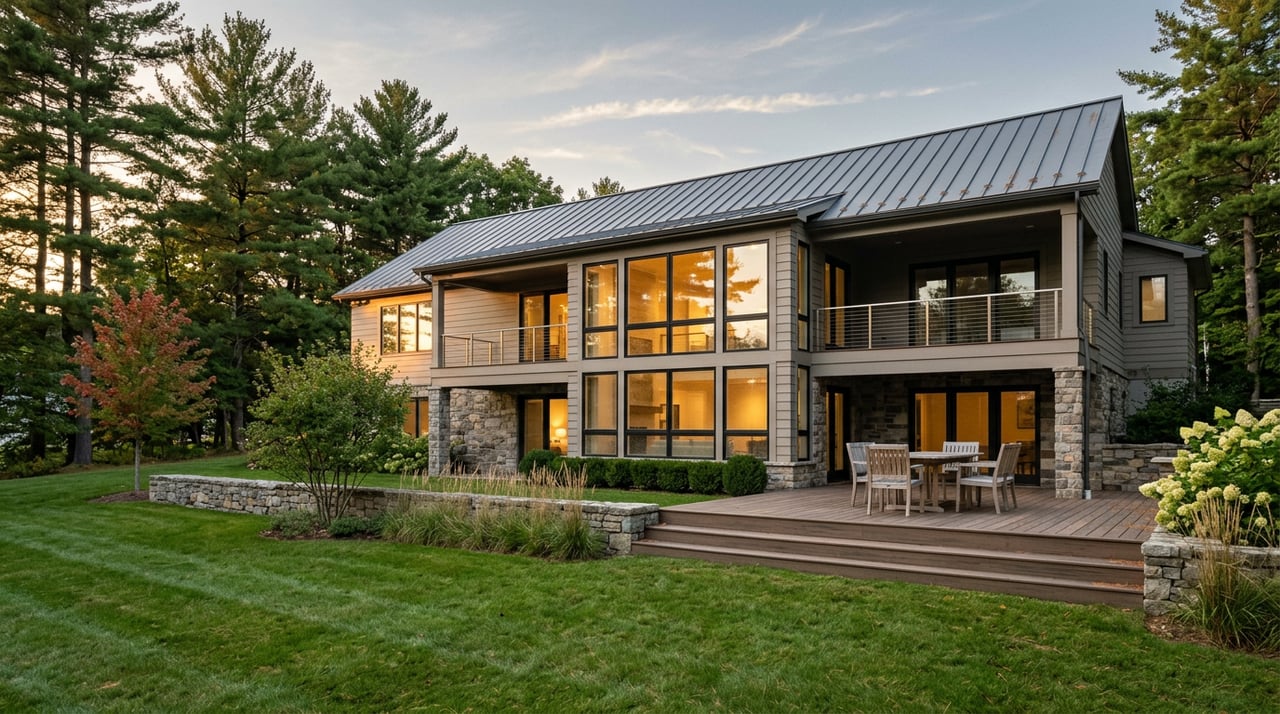
The Lake Michigan Waterfront "Slowdown" Is Six Different Markets Wearing One Number
September 17, 2026
September 17, 2026
Ask anyone tracking the Lake Michigan shoreline how the market is doing this year and you'll get a shrug. Sales across the corridor, from the Indiana border up through South Haven, came in at 265 closings in the trailing twelve months ending July 31, 2026, up from 260 the year before. That's a gain of less than 2 percent. On paper, it reads like a market that stopped moving.
It didn't stop moving. It split.
Underneath that flat-looking 1.92 percent, the market's price bands moved in different ways, and the direction your money is heading in has almost nothing to do with the regional average. If you're comparing what a Lake Michigan property actually costs and how hard you'll have to fight for it, the corridor-wide number is close to useless. The band you're shopping in is the only number that matters.
Start with the split that gets flattened first: true waterfront versus water access. A home with direct Lake Michigan frontage is a different asset than a home with deeded lake access down the road, and the two moved differently this year. True waterfront posted 67 sales against 64 a year earlier, up 4.69 percent. Water access properties, the ones with a shared beach path or association dock but no private shoreline, recorded 180 sales against 175, up 2.86 percent. Both grew. Neither grew fast enough to explain what happened next.
Sales under $500,000 fell 8.47 percent across the whole shoreline, 54 homes against 59 the year before. Inside the water-access segment specifically, that drop was sharper still, down 15.79 percent on just 32 sales. It's tempting to read that as buyers losing interest in the entry tier. They didn't. Active inventory in that band is thin enough that fewer closings show up even when the number of interested buyers hasn't moved at all. A dozen or so waterfront sales a year at the low end means one or two fewer listings can swing the percentage without touching the underlying demand. Scarcity, not disinterest, is doing the work here.
Now look at the other end. The $3M-plus true waterfront tier sold 16 homes in the trailing twelve months, double the 8 sales in the prior period, a 100 percent increase. Absorption in that tier sits at 5.25 months, which is genuinely fast for a price point that has historically been able to sit unsold for a year or longer without raising much alarm.
One tier down, the story flips. The $1 million to $2 million waterfront band sold 16 homes, down from 21 a year earlier, a 23.81 percent decline, with absorption stretching to 6.00 months. The $2 million to $3 million band fell further still, down 27.27 percent on 8 sales versus 11. Three adjacent price bands, three completely different years.
That contraction in the middle isn't necessarily a demand problem either. One Southwest Michigan lake broker, Drew Vinton of Lake Life Realty, described what he was seeing on the ground as the July numbers came in:
"July picked up quite a bit more than June, and inventory is still down. Pending sales went up 46 percent. The waterfront is still in really high demand everywhere. There's very little inventory, even though the data shows a number of actives, some with functional issues or higher bluffs. But a few of the high end properties that had been sitting for 180 days or so, that had some issues, went under contract this past month."
Read that carefully and the middle-tier decline looks less like buyers backing away and more like a lag between what's closing now and what's already under contract. Properties that had been sitting for six months, often because of a specific fixable issue rather than a pricing problem, started moving again as soon as the right buyer showed up. The trailing twelve-month closed number reflects a slow stretch that's already behind the market, not where the market is heading.
| Price Band | Trailing 12-Month Sales | Year-Over-Year Change | Absorption |
|---|---|---|---|
| Under $500K (water access) | 32 | -15.79% | Tight, thin inventory |
| Under $500K (shoreline overall) | 54 | -8.47% | Tight, thin inventory |
| $1M to $2M (true waterfront) | 16 | -23.81% | 6.00 months |
| $2M to $3M (true waterfront) | 8 | -27.27% | Not disclosed |
| $3M+ (true waterfront) | 16 | +100.00% | 5.25 months |
Trailing 12 months ending July 31, 2026, compared to the prior 12-month period.
No single row in that table describes the market. All five rows together do.
None of this divergence is happening in a vacuum. The median sale price across the full corridor, waterfront and water access combined, climbed from $410,000 in 2015 to $872,500 in 2025, more than doubling over a decade. Unit sales tell a choppier story over that same stretch, peaking at 554 homes in 2020 before settling back into the 250 to 290 range that both preceded and followed that peak. The shoreline has been on a long, uneven climb for over a decade. What's new this year isn't the climb itself. It's how unevenly that climb is distributing itself across price points in a single twelve-month window.
If you're comparing Lake Michigan towns with a specific number in mind, the corridor average tells you almost nothing about what you're about to experience.
The next time a listing site tells you Lake Michigan waterfront sales are "up slightly" or "roughly flat" for the year, the honest response is to ask which band that average is smoothing over. A flat corridor number can hide a doubling at the top and a pullback in the middle at the same time. It happened this year. The only way to know what you're actually walking into is to look at your specific price point, not the blended number sitting above it.
If you're weighing a Lake Michigan property against a specific budget and want a straight read on what that price point is actually doing right now, Tony Hernandez can walk you through it. Get your free home valuation and a clear picture of where your number stands in today's shoreline market.
Stay up to date on the latest real estate trends.

How one inspection can prevent costly surprises underground.

October 2026 | By Tony Hernandez, REALTOR® | Five Star Real Estate
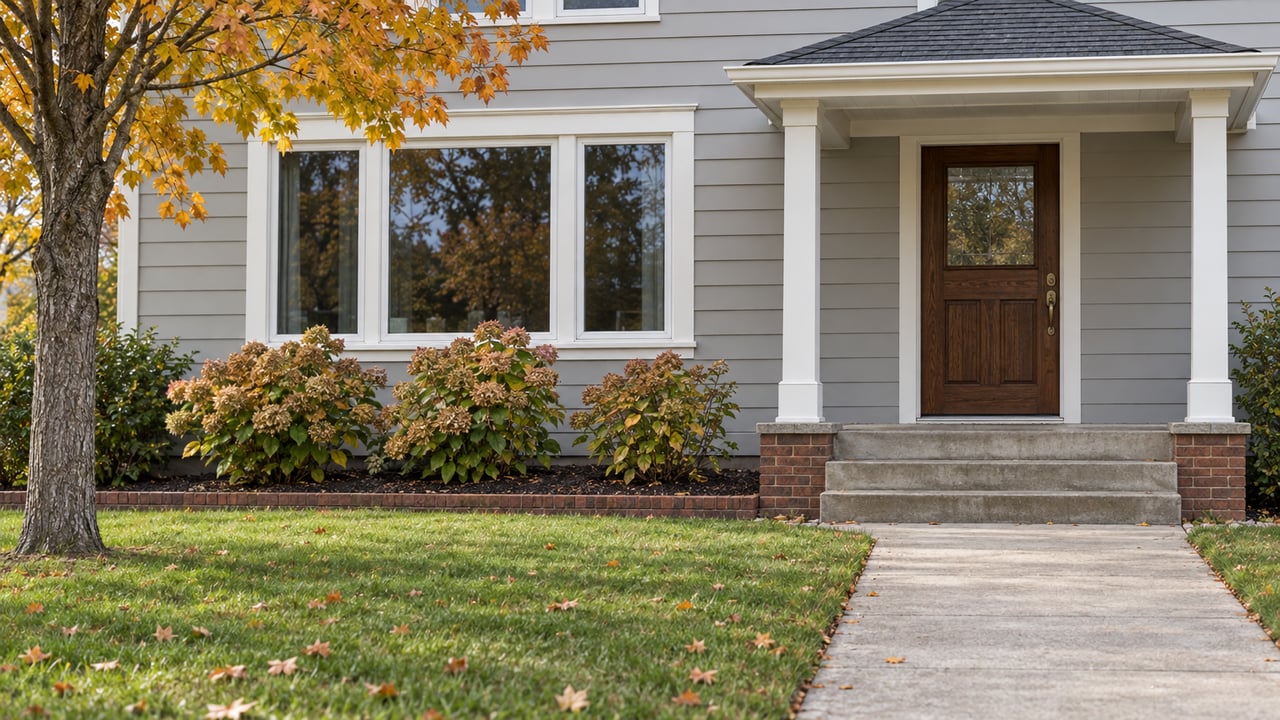

Thinking about buying a lake house in West Michigan? Don't overlook the fall market. You might be surprised by the opportunities available after the busy summer season.
Get assistance in determining current property value, crafting a competitive offer, writing and negotiating a contract, and much more. Contact me today.